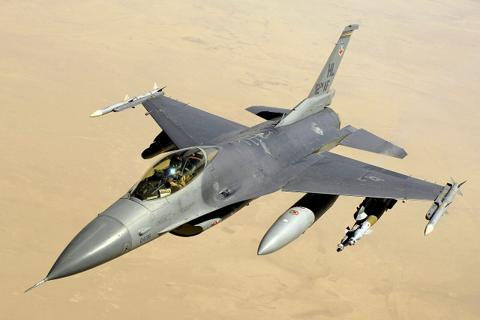
The Panavia Tornado is a twin-engine, two-seat, swing-wing strike aircraft built by a British, West German and Italian consortium. About 990 were built between 1979 and 1998 in strike, air defence and electronic combat versions, and Saudi Arabia still flies it after the RAF retired its fleet in 2019. Developed by Panavia Aircraft GmbH (British Aerospace, MBB and Aeritalia).
The Panavia Tornado is a twin-engine, two-seat, swing-wing strike aircraft built by a British, West German and Italian consortium. Developed by Panavia Aircraft GmbH (British Aerospace, MBB and Aeritalia).

See Specifications for full detail.
The Panavia Tornado is a twin-engine, two-seat, variable-geometry combat aircraft built by a British, West German and Italian consortium for low-level strike, air defence and electronic combat. About 990 were built between 1979 and 1998.[1]
The RAF retired its last Tornado GR4 in 2019. Germany, Italy and Saudi Arabia flew it after that, and Saudi Arabia is the only air force still reported to operate a large fleet.[1][2]
A multi-role aircraft working group began in 1968 and Britain joined in the same year. Panavia Aircraft GmbH was formed on 26th March 1969, and the Netherlands withdrew in 1970. Workshare was set at 42.5 percent each for Britain and West Germany and 15 percent for Italy, and the RB199 engine came from Turbo-Union, owned 40 percent by Rolls-Royce, 40 percent by MTU and 20 percent by FIAT.[1]
Prototype P.01 flew from Manching on 14th August 1974, and the first British prototype, XX946, flew from Warton on 30th October 1974. The first production aircraft, ZA319, flew on 10th July 1979. The first Italian delivery followed on 25th September 1981, and the 500th aircraft went to West Germany on 19th December 1987.[1][3]
The wings sweep between 25 and 67 degrees, spread for short take-offs and landings and swept back for a fast dash at low altitude. The RB199 has a built-in thrust reverser, so the aircraft can stop on a short runway, and the strike version pairs a ground-mapping radar with a terrain-following radar for blind low-level flight.[4][3]
The strike version is a two-seater by design, with a navigator running the radars, navigation and weapons. Speed is above Mach 2.2 at altitude, and the type is credited with 2,337 km/h at 36,090 ft and Mach 1.2 at sea level.[4]
The RAF deployed 49 Tornado GR1s for Operation Granby, and on the first night they attacked Iraqi airfields at very low level with the JP233 runway-denial weapon. On 17th January 1991 GR1 ZD791 of XV Squadron was hit by an SA-14 during a daylight attack on Ar Rumaylah airfield. Squadron Leader John Peters and Flight Lieutenant John Nichol were captured, appeared on Iraqi television, and were released on 5th March 1991.[5][6]
The Tornado force lost six aircraft in the campaign, four during unguided bombing, one after a JP233 attack and one during laser-guided bombing. The RAF stopped low-level airfield attacks once the Iraqi Air Force did not fly, and went on to fly more than 1,500 Tornado GR1 sorties. Italy deployed eight IDS and lost one to anti-aircraft fire, and the crew survived as prisoners.[5][1]
In Kosovo in 1999 German aircraft flew 446 sorties and fired 236 HARM missiles, and Italian aircraft fired 115 HARMs. In 2003 RAF Tornados flew in Operation Telic, and on 23rd March GR4A ZG710 of IX(B) Squadron was shot down by a US Army Patriot battery 16 nautical miles northwest of Ali Al Salem in Kuwait. Flight Lieutenants Kevin Main and David Williams were killed.[1][7][8]
The RAF board of inquiry listed several contributory factors, including the Patriot's classification criteria, the rules of engagement, the Tornado's IFF equipment, which never answered the challenge, and Mode 1 codes that had not been loaded. The Patriot crew had about 60 seconds to decide, and the RAF then fitted a new IFF to 40 GR4 and 27 F3 aircraft.[7][9]
In Libya in 2011 RAF Tornados flew missions of about 3,000 miles, the longest RAF bombing sorties since the Falklands. RAF strikes against ISIL began on 2nd December 2015 under Operation Shader, and on 14th April 2018 four GR4s hit a Syrian facility with Storm Shadow missiles. From September 2014 to January 2019 Tornados accounted for about 31 percent of an estimated 4,315 ISIL casualties.[1]
The last RAF operational sorties were flown on 31st January 2019, and the GR4 retired on 1st April 2019. Italy withdrew its IDS from 6° Stormo at Ghedi from July 2025. Germany plans to retire its fleet between 2026 and 2030 and to replace the nuclear role with 35 F-35s, and Saudi Arabia, the only export customer, still flies about 81 strike aircraft, which a 2026 report describes as nearing the end of their life.[1][2]
The Panavia Tornado has a top speed of 1,263 kn (1,453 mph / 2,337 km/h).
A total of 990 were built.
Yes, the Panavia Tornado is still in service.
The Panavia Tornado first flew on August 14th 1974.
The Panavia Tornado has a range of 2,417 mi (3,890 km) ferry range; combat radius about 864 mi (1,390 km).
A selection of preserved aircraft whose locations were confirmed in the sources checked, so not a full census.
Search type TOR. German and Saudi Tornados rarely broadcast their positions on public trackers, so sightings are uncommon outside airshow flights.
| Performance | |
| Max Speed | 1,263 kn (1,453 mph / 2,337 km/h) |
|---|---|
| RangeRange — How far an aircraft can fly without refuelling. Quoted figures vary with payload, speed and reserves - see also ferry range and combat radius. Glossary → | 2,417 mi ferry range; combat radius about 864 mi |
| Service CeilingService Ceiling — The highest altitude at which an aircraft can still climb at a useful rate (typically 100 ft/min). Above it, the air is too thin to keep climbing meaningfully. Glossary → | 50,000 ft |
| Airframe & Weight | |
| Wingspan | 45 ft 8 in at 25 degrees; about 28 ft 3 in at 67 degrees |
| Length | 54 ft 10 in |
| Height | 19 ft 6 in |
| WeightMTOW — Maximum Take-Off Weight - the heaviest an aircraft is certified to be at the start of its take-off run, including fuel, crew, payload and the aircraft itself. Glossary → | empty: 31,063 lb; MTOW: 61,729 lb |
| Power & Payload | |
| Engines | 2 x Turbo-Union RB199-34R Mk 103 afterburning turbofans, 8,650 lbf (38.48 kN) dry and 16,075 lbf (71.5 kN) with afterburner each |
| ArmamentArmament — The weapons an aircraft can carry: guns, missiles, bombs and rockets, whether mounted internally, on wing hardpoints, or in bomb bays. Glossary → | 2 x 27 mm Mauser BK-27 cannon (one in the air defence version); weapons have included JP233, Storm Shadow, Taurus, ALARM, HARM, Brimstone, Paveway and JDAM guided weapons, Sidewinder, ASRAAM, Skyflash and AMRAAM air-to-air missiles, and the WE.177 and B61 nuclear bombs |
| Crew | 2 (pilot and navigator or weapons systems officer) |
| Program & Service | |
| Manufacturer | Panavia Aircraft GmbH (British Aerospace, MBB and Aeritalia) |
| Origin | United Kingdom / Germany / Italy |
| First Flight | August 14th 1974 |
| Service Entry | 1979 |
| Number Built | 990 |
| Unit Cost | Not publicly disclosed - no single price exists for a three nation programme, and the one figure found for the GR4 era (about £17M to £20M) comes from a single secondary source |
| Combat Losses | Six RAF Tornados lost in the 1991 Gulf War, one RAF GR4A shot down by a US Patriot battery on 23rd March 2003, and one Italian aircraft lost to anti-aircraft fire in 1991 with the crew captured |
6 notable events involving the Tornado, 1974 to 2019. 4 deaths are recorded across the 3 of these with a figure listed. Curated rather than exhaustive.
Prototype P.01 made the first flight of the programme from Manching in Germany on 14th August 1974.
A Tornado GR1 of XV Squadron was hit by an SA-14 missile during a daylight attack on Ar Rumaylah airfield on 17th January 1991. Squadron Leader John Peters and Flight Lieutenant John Nichol were captured, and they were released on 5th March 1991.
A Tornado GR1 was lost on 18th January 1991, killing Wing Commander Nigel Elsdon and Flight Lieutenant Max Collier, one of six RAF Tornados lost in the campaign.
GR4A ZG710 of IX(B) Squadron was hit by a Patriot missile 16 nautical miles northwest of Ali Al Salem, Kuwait, on 22nd and 23rd March 2003. Flight Lieutenants Kevin Main and David Williams were killed.
Four RAF GR4s struck a Syrian facility with Storm Shadow missiles on 14th April 2018.
The last RAF operational sorties were flown on 31st January 2019, and the GR4 retired from the RAF on 1st April 2019.
| Tornado IDS / GR1 | The interdictor strike version was the aircraft the programme was built around, a low-level, all-weather bomber with terrain-following radar. Britain ordered 220 and received 228 in total, Germany took about 210, Italy 100 and Saudi Arabia 96. It first served in 1979 and was the type used in the 1991 Gulf War. |
| Tornado GR4 / GR4A | The RAF's mid-life update converted 142 GR1s to GR4 standard between 1996 and 2003, adding new avionics, a forward-looking infrared sensor and Storm Shadow, Brimstone and Paveway IV weapons. The GR4A added a reconnaissance fit. It received operational clearance in April 2001 and was retired from the RAF in 2019. |
| Tornado ADV / F2 / F3 | The air defence variant was a stretched interceptor with a larger radar and long-range missiles, built to defend British airspace against Soviet bombers. The first prototype flew on 27th October 1979. About 194 were built, 165 for the RAF as 18 F2 and 147 F3, and Saudi Arabia and Italy also flew it. The RAF retired the F3 in 2011. |
| Tornado ECR / EA-200 | The electronic combat and reconnaissance version was developed for Germany and Italy to find and destroy enemy radars with anti-radiation missiles. Germany took 35 new-build ECRs and Italy converted 16 of its IDS fleet to this standard. They fired HARM missiles in Kosovo in 1999, where German aircraft launched 236 and Italian aircraft 115. |


No photos added yet for this aircraft.
A selection of preserved aircraft whose locations were confirmed in the sources checked, so not a full census.
No newly associated news articles since this aircraft was added to PlanesDB. When new news articles are published, they will be automatically added and tracked here.
Numbered as cited in the Overview article. Click a reference to see where it's used.
Additional reading you might find interesting...
PlanesDB entries are living documents - this is how this one has evolved, and who helped make it happen. Spotted something out of date? Help update it.